🚀 In the heart of Beijing’s Zhongguancun, innovation is on fire: this compact hub covers less than 4% of the city but pumps out around one-third of its economic power.
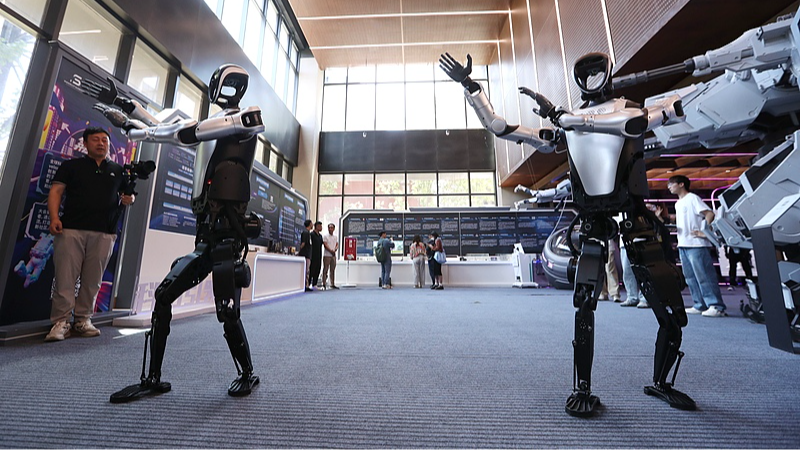
From AI chatbots to quantum experiments, breakthroughs are popping up daily. Over 200 locally developed large language models—nearly 30% of the national total—are calling this place home 🌐. And with 90+ unicorn startups spin out here, Zhongguancun-based enterprises are set to surpass 10 trillion yuan in revenue this year 💰.
Back in September 2013, General Secretary and President Xi Jinping took a ground-breaking step: he moved the CPC Central Committee’s first offsite study session to Zhongguancun. He urged the region to 'not wait, not stand idle, and not slack off'—a mantra still fueling today’s tech sprint.
Under the 14th Five-Year Plan, Beijing teams up with Tianjin’s manufacturing muscle and Hebei’s tech absorptive capacity. The goal? Share spillovers, transfer industries, and jointly build a sci-tech innovation highland across the Beijing–Tianjin–Hebei area.
Out in Huairou Science City, the High Energy Photon Source is about to start trial runs alongside 29 major research platforms. With 145 national key labs, 10 new research institutions, and R&D spending holding at around 6% of GDP, Beijing topped the 2025 International Science and Technology Innovation Center Index’s global Science Center ranking 🌍.
Beijing’s industrial clusters are stacking up: three trillion-yuan hubs in next-gen IT, sci-tech services, and healthcare, plus 700-billion-yuan powerhouses in intelligent manufacturing and AI. In the first eleven months of 2025, these strategic emerging industries grew a stellar 16.5% year on year 📈.
As the innovation leader of the matrix, Beijing’s tech spillover radiates across the region. At Xiong’an New Area’s Zhongguancun Science Park, 11 integrated platforms offer one-stop services for tech, finance, and research. More than 220 joint research projects and consortiums have united Beijing, Tianjin, and Hebei in cross-regional synergy.
The connected vehicle industry has even created a 'one-hour support circle'—order auto parts in the morning, and they arrive by afternoon 🚗💨. Plus, seven national-level advanced manufacturing clusters now dot the BTH map, underlining a coordinated pattern of R&D in Beijing and transformation in Tianjin and Hebei.
At the recent Central Economic Work Conference, the CPC Central Committee expanded the Beijing International Science and Technology Innovation Center to cover the whole Beijing–Tianjin–Hebei region. As Professor Wan Zhe from Beijing Normal University says, this shift from solo breakthroughs to regional collaboration is rocket fuel for the Chinese mainland’s journey to a world-leading sci-tech powerhouse.
Standing at this new starting line, Beijing, Tianjin, and Hebei are pooling strengths and mapping out a bold blueprint. The next chapter in global innovation is being written here—bright, collaborative, and full of potential 🌟.
Reference(s):
Beijing-Tianjin-Hebei sci-tech innovation embarks on a new drive
cgtn.com