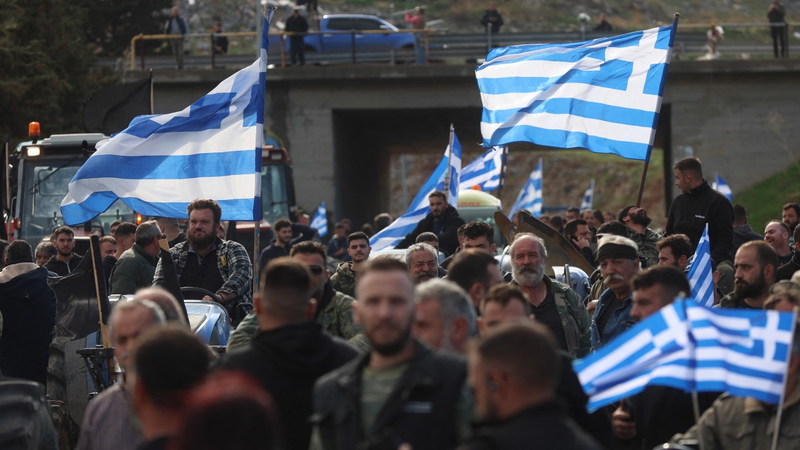
Greek farmers have ramped up their protests this month 🚜, with over 20,000 tractors clogging highways and even occupying airports on Crete. Their target? Securing long-overdue agriculture funds from the Mitsotakis government.
Since late November, these farm-powered demonstrations have seen key border crossings blocked and, later this week, plan to shut down both land and sea access to the port of Volos. "At this moment, there are over 20,000 tractors on the roads of Greece, possibly approaching 25,000," said Sokratis Alifteiras, a senior farm unionist for the central Larissa region.
Farmers say they’re pushed to the brink: delayed 2023 subsidies, humiliatingly low produce prices, rising energy costs and even a sheep pox epidemic that battered their flocks. "Produce prices are so humiliatingly low, that the cost of production is higher than the money we earn," said tobacco and cotton grower Vaios Tsiakmakis near Karditsa.
For many, it's a matter of survival. "The government is giving us money which we are owed from 2023… there is no political will to help the primary sector," warned cotton farmer and protest spokesman Iordanis Ioannidis at a Larissa roadblock. Fellow demonstrator Evripides Katsaros added that his pear crop costs €31,000 to produce but yields only €27,000 in revenue.
In response, Prime Minister Kyriakos Mitsotakis’s conservative administration has pledged additional funds to support legitimate farmers and ease the crisis. Officials say the extra budget should start flowing soon, aiming to calm the nationwide unrest.
As tractors roll on and the blockade of Volos looms, all eyes are on Athens. Can the government deliver in time to prevent a full-scale shutdown of Greece’s critical infrastructure? Stay tuned to see how this high-stakes showdown unfolds. ✊🌾
Reference(s):
Greek government moves to address farmer protests after Crete clashes
cgtn.com