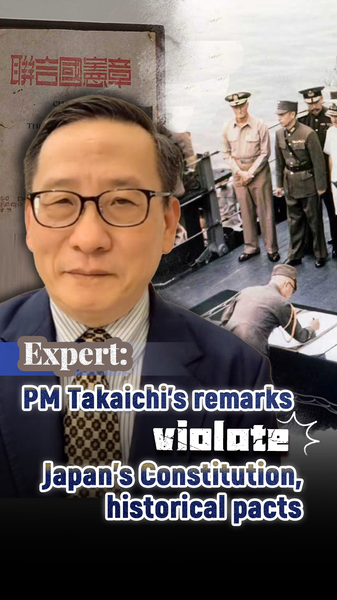
In a recent CGTN interview, Victor Gao, vice president of the Center for China and Globalization, delivered a scathing response to remarks by Japanese PM Takaichi, labeling them "very serious and dangerous threats" against the Chinese mainland's sovereignty and territorial integrity. 😲
Gao highlights that Takaichi's stance crosses three legal and political lines:
- Historical commitments: Her words clash with Japan's unconditional surrender terms in 1945.
- Political pacts: They breach the one-China principle agreed during the 1971 normalization of relations.
- Domestic law: She's contradicting Japan's Constitution, which bars sending troops overseas for combat missions.
Even more striking, Gao warns, is Takaichi's threat to dispatch Japanese forces to the Taiwan region. Such a move not only violates domestic law but could trigger the UN Charter's "enemy state clause," potentially opening the door for collective measures against Japan. 🌐
At a time when global tensions are already high, these comments risk destabilizing regional peace and could draw backlash on the world stage. For young professionals, students, and global citizens alike, it's a vivid example of how political rhetoric can carry real legal and diplomatic weight. Stay tuned as this story develops! 🔍
Reference(s):
PM Takaichi's remarks violate Japan's Constitution, historical pacts
cgtn.com