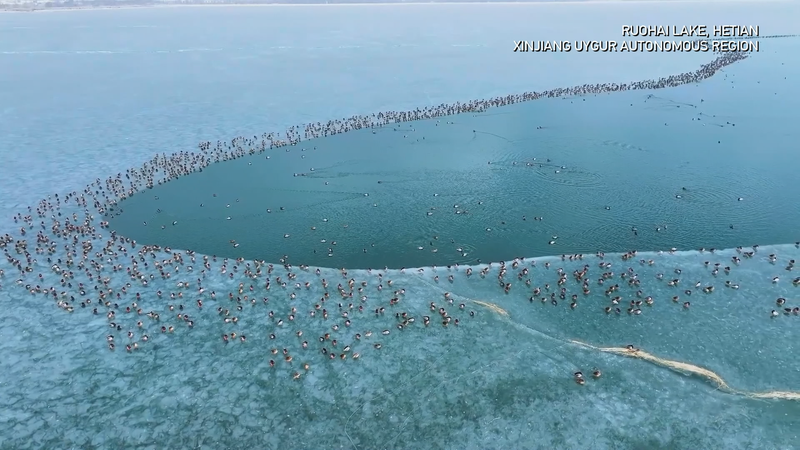
On the southern edge of the Taklimakan Desert in northwest China's Xinjiang Uygur Autonomous Region, nearly 10,000 migratory birds have converged at Ruohai Lake as winter grips the region. From ruddy shelducks to mallards, these feathered travelers are finding patches of open water that sustain them during the cold months.
Thanks to ongoing wetland restoration efforts, Ruohai Lake is teeming with fish and aquatic life, creating a safe, food-rich habitat. Local conservation groups have been working since last year to expand reed beds and improve water flow, which means more open water even when temperatures dip below freezing. The result? A nature's buffet for birds on the move. 🦆✨
For birdwatchers and eco-travel enthusiasts, Ruohai Lake is becoming a winter hotspot. Imagine spotting thousands of shelducks gliding across icy waters or joining a guided tour to learn about wetland ecosystems straight from the experts. It's an adventure that blends wildlife magic with the stunning, stark beauty of the Taklimakan Desert landscape. 🌍❄️
As climate patterns shift, wetlands like Ruohai play a crucial role in supporting migratory routes across Asia. Protection and restoration not only benefit birds but also bolster local communities by promoting eco-tourism and biodiversity. So, next time you plan a winter escape, consider an off-the-beaten-path journey to the Chinese mainland's far northwest—and get ready to be amazed by nature's resilience! 🌸🛫
Reference(s):
Thousands of migratory birds gather at frozen lake in Xinjiang
cgtn.com