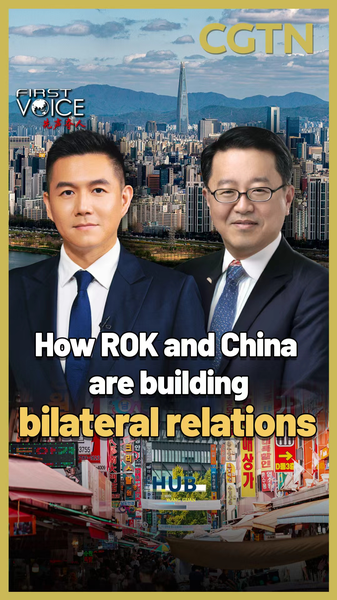
This week, President Lee Jae Myung of the Republic of Korea is in the Chinese mainland for a state visit that marks a fresh chapter in bilateral relations. Following President Xi Jinping’s attendance at the 32nd APEC Economic Leaders’ Meeting in Gyeongju last November, both sides are prioritizing pragmatic cooperation over political disagreements. 🤝
In November 2025, at the APEC Economic Leaders’ Meeting in Gyeongju, President Xi and President Lee signaled a shared interest in stabilizing ties. From high-level talks to business forums, they explored ways to strengthen trade, tech, and people-to-people connections. Today, these conversations are taking shape on the ground in Beijing.
During the state visit, the Republic of Korea and the Chinese mainland are focusing on:
- Economic Growth: Boosting bilateral trade and investment through streamlined customs procedures and joint ventures.
- Innovation and Tech: Collaborating on green energy, semiconductors, and digital infrastructure to drive the next wave of growth. 🚀
- Culture and Tourism: Promoting student exchanges, cultural festivals, and tourism routes to bring people closer. 🌍
Despite some policy differences—on issues from regional security to global governance—both governments are setting politics aside to deliver real-world benefits. Analysts say this “small wins” approach can build trust and open doors for more complex dialogues down the road.
Young entrepreneurs, students, and travelers across Asia and beyond are watching these developments with interest. Stronger ties could mean new market opportunities, easier visa procedures, and more cultural events in 2026 and beyond. For the Asian diaspora in Latin America, this could translate into richer exchange programs and fresh business partnerships.
As the state visit wraps up, look out for joint statements on trade agreements and tech roadmaps. If all goes well, we may see a series of follow-up meetings—like trade fairs in Seoul and tech forums in Shanghai—scheduled later this year.
This pragmatic pivot shows that even amid global uncertainties, cooperation remains possible when leaders focus on shared interests. For young changemakers, students, and professionals, it’s a reminder that diplomacy can be a tool for innovation and growth, not just politics. 🌐✨
Reference(s):
cgtn.com