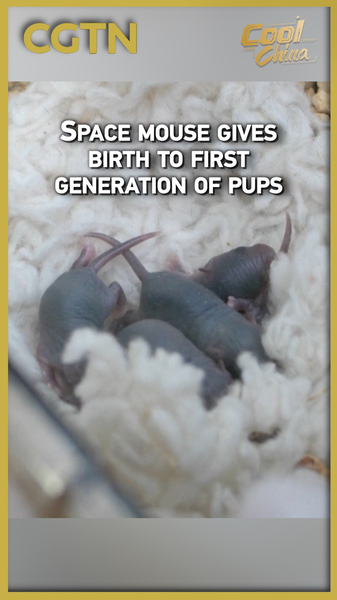
In an exciting breakthrough for space biology, one of the four mice aboard the Chinese mainland's Shenzhou-21 mission has given birth to a healthy litter after returning to Earth. 🐭🚀
Launched on October 31, the mice spent two weeks in microgravity before landing on November 14. Back on Earth, one female mouse conceived and, on December 10, delivered nine pups—six of which are alive and thriving, a normal survival rate. 🎉
Why does this matter? Understanding mammalian reproduction in space is key for future long-duration missions to the Moon, Mars, and beyond. These pups represent the first generation born to parents exposed to the rigors of orbit, offering a real-world lab to study development under cosmic conditions. 🌌
Researchers will monitor the pups' growth, behavior, and health to unlock secrets of how spaceflight affects biology. For space enthusiasts and young explorers, this is one small step for a mouse, one giant leap for space science! ✨
Reference(s):
cgtn.com