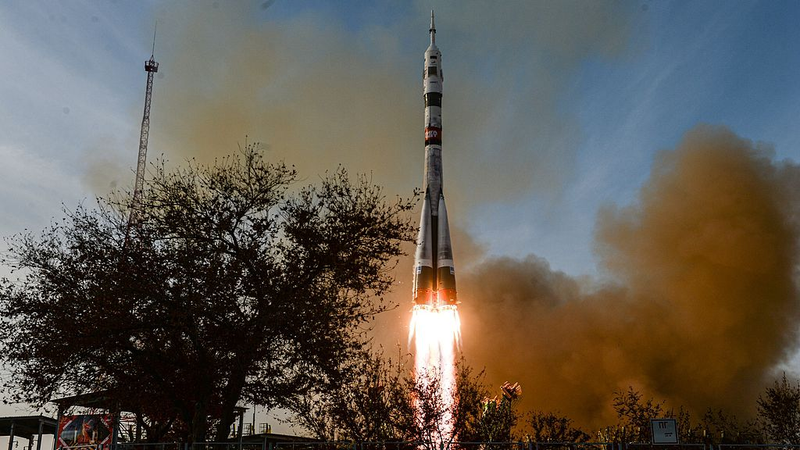
Yesterday, on Thursday, November 27, a Soyuz-2.1a carrier rocket thundered off the pad at Baikonur Cosmodrome in Kazakhstan, sending the Soyuz MS-28 spacecraft on a journey to the International Space Station (ISS). 🚀
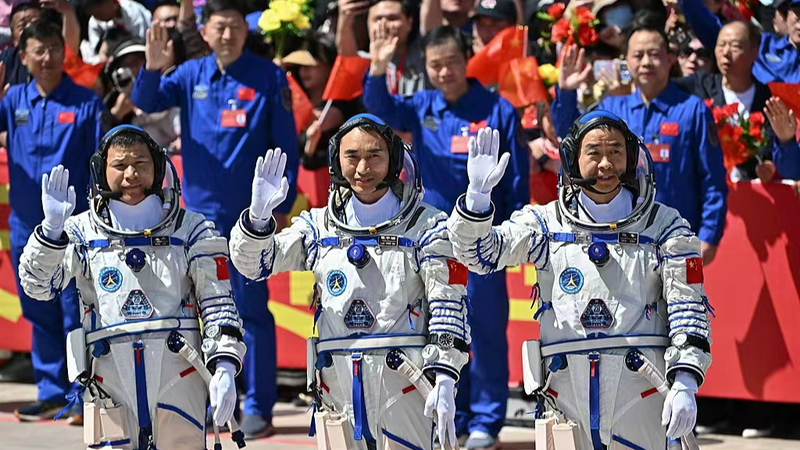
Commanded by veteran Russian cosmonaut Sergei Kud-Sverchkov, flying for his second mission, and joined by rookie cosmonaut Sergei Mikayev and NASA astronaut Christopher Williams, the trio docked with the ISS's Rassvet module at 7:34 a.m. EST after an ultra-fast rendezvous. 🤝🌍
For the first time ever, this crew will team up with GigaChat, a generative AI neural network from Russia's Sberbank. Albert Efimov, vice president at Sberbank, says GigaChat will help write reports, manage databases, and lighten the load of day-to-day tasks—imagine having your own AI mission control assistant! 🧑💻✨
This 242-day mission stretches through summer 2026, packing over 40 experiments into the station's lab modules. Two spacewalks are on deck: in April 2026, the crew will install the Sun-Terahertz instrument to boost solar flare forecasting, and in June, they'll tackle maintenance on the Zarya module, swapping out aging components. 🛰🔧
Even the descendants of fruit flies that flew on the Bion-M No.2 biosatellite are making a comeback, hitching a ride for genetics studies in microgravity. 🪰🧬 It's a cosmic family reunion!
This mission marks a thrilling blend of human courage and cutting-edge AI, pushing the boundaries of life and science in space. Stay tuned for more updates as the Soyuz MS-28 crew settles into orbit! 🌌🚀
Reference(s):
cgtn.com