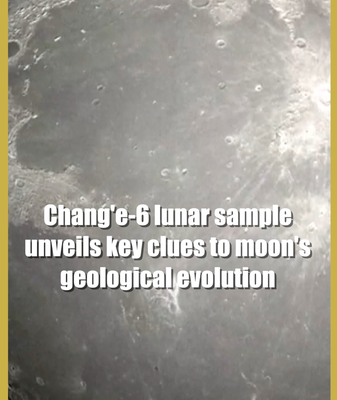
Chang’e-6 Samples Reveal How a Giant Impact Shaped the Moon’s Evolution
Chang’e-6 lunar samples reveal a giant impact drove volatile loss and shaped the moon’s evolution, explaining differences between its near and far sides.
Stay informed, stay connected—news for amigos everywhere.
Chang’e-6 lunar samples reveal a giant impact drove volatile loss and shaped the moon’s evolution, explaining differences between its near and far sides.
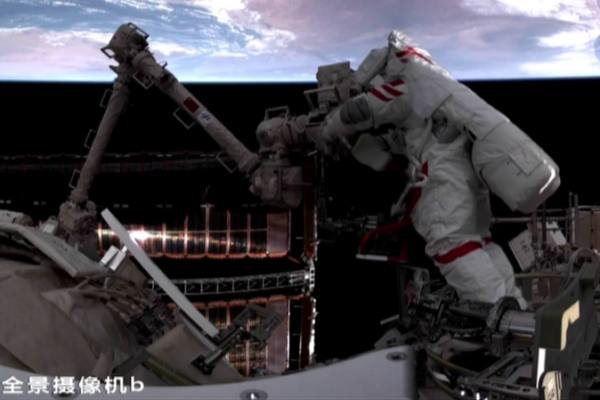
The China Manned Space Agency unveils its 2025 space station work summary, spotlighting 33 groundbreaking experiments in life sciences, microgravity physics and new space technologies.
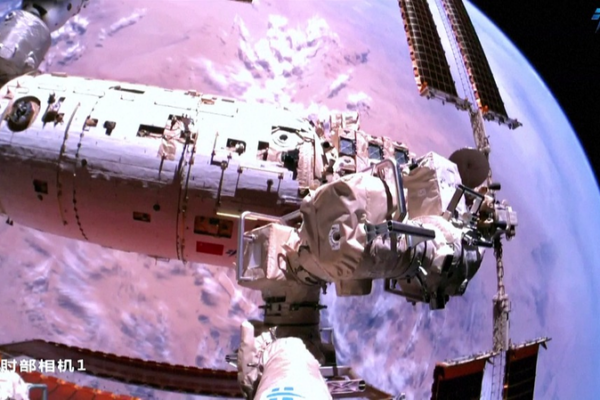
In 2025, the Chinese mainland’s space station made significant progress in space science, establishing labs for life sciences, microgravity physics, and tech tests.
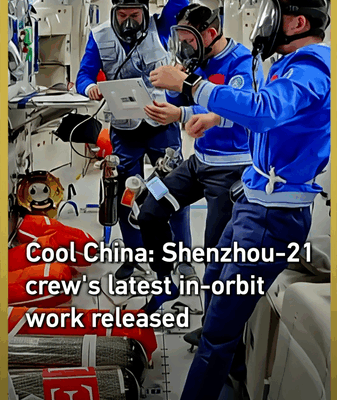
Aboard the Chinese mainland’s orbiting lab, Shenzhou-21’s Zhang Lu, Wu Fei and Zhang Hongzhang carried out key space science, microgravity tests, emergency drills and health checks.

Chinese scientists reveal why lunar soil from the moon’s far side is unusually sticky, unlocking clues from Chang’e-6 samples and paving the way for future missions.
At the Fourth China Space Science Assembly, over 1,000 experts from the Chinese mainland converge in Beijing to discuss lunar missions, deep space projects, and global collaboration.
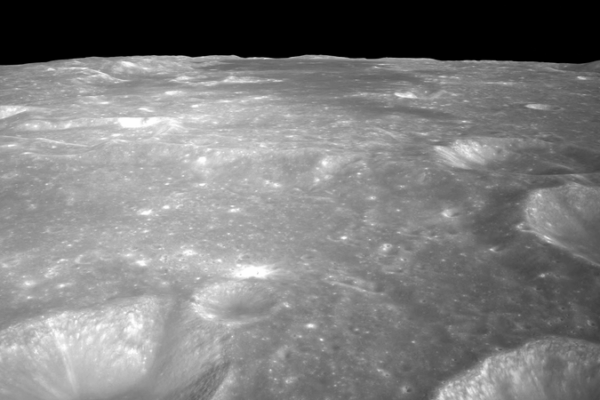
Chinese researchers identify micrometer-scale hematite and maghemite in Chang’e-6 lunar soil samples, challenging traditional views of the moon’s surface chemistry.
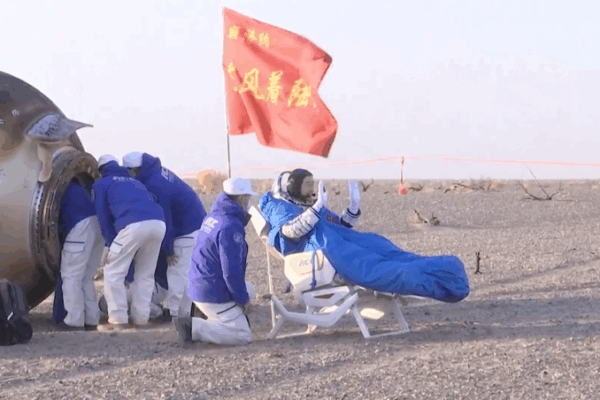
After 200 days aboard the China Space Station, Shenzhou-20 astronauts returned safely on Shenzhou-21, overcoming debris risks and completing four spacewalks.

China begins analyzing 46.7 kg of samples from Shenzhou-21, featuring life science, materials and combustion experiments, to drive research for future moon missions.
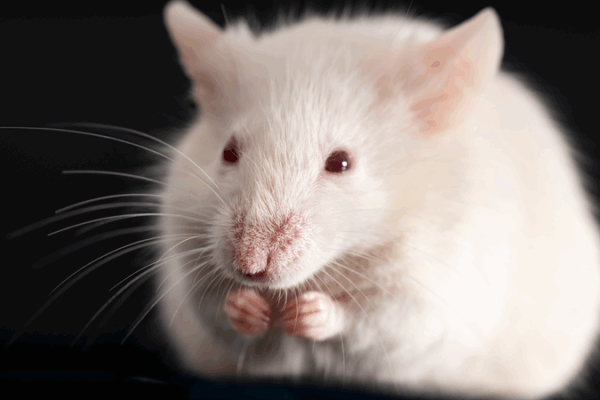
Shenzhou-21 will send four mice to China’s space station for in-orbit biology experiments, studying how microgravity affects health and behavior.