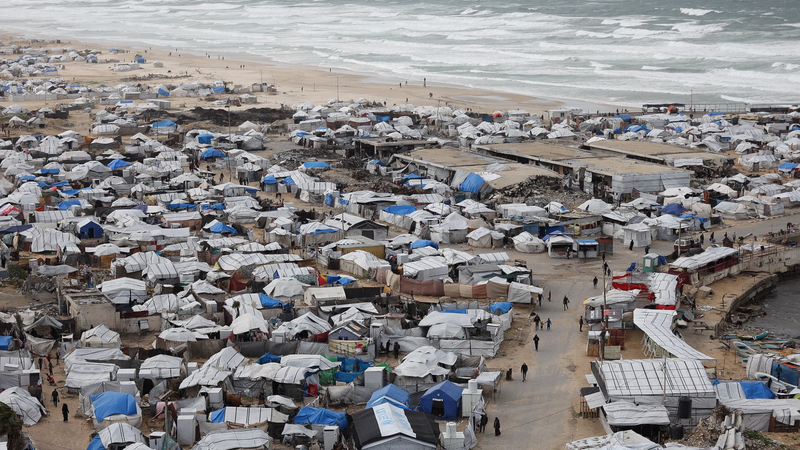
This weekend, a severe storm ripped through the Gaza Strip, killing at least two people and flooding displaced families' camps, underlining the region's fragile humanitarian situation.
Mahmoud Basal, spokesperson for Gaza's Civil Defense, said on Sunday, December 28, that a seven-year-old child died after falling into a well, while a 30-year-old woman was killed by a collapsing wall amid strong winds and heavy rain. Civil Defense teams have been pumping water out of dozens of flooded tents and clearing blocked drains 🌧️.
Nizar Ayyash, mayor of Deir al-Balah in central Gaza, described many displacement camps as "muddy swamps," adding that the municipality lacks the resources and equipment to help residents cope.
Gaza's emergency operations room warned it urgently needs about 200,000 prefabricated housing units to provide safe shelter for families exposed to cold weather and persistent leaks after fragile tents and damaged homes were destroyed.
Amid the storm, diplomatic efforts continue to shape Gaza's future governance and security. On Monday, December 29, U.S. President Donald Trump is set to meet Israeli Prime Minister Benjamin Netanyahu at Mar-a-Lago to discuss the second phase of the Gaza ceasefire, along with regional concerns over Hezbollah and Iran 🤝.
The fragile ceasefire, agreed in October, calls for Israel to withdraw from Gaza and for Hamas to disarm and step back from governance. U.S. Secretary of State Marco Rubio has proposed a transitional administration—a "Board of Peace" led by Palestinian technocrats—followed by an international security force per the UN Security Council's November 17 resolution.
However, deep divisions remain. Israel and Hamas accuse each other of major breaches, and neither side has agreed to the next difficult steps. Hamas has refused to disarm or return the remains of the last Israeli hostage, while Israeli troops remain entrenched in about half of Gaza. Israel has warned it could resume military action if disarmament does not proceed peacefully.
Since October, Israeli strikes have killed more than 400 Palestinians—most of them civilians, according to Gaza health officials—while Palestinian militants have killed three Israeli soldiers.
The storm's destruction and the stalled peace talks have left Gaza's residents caught between heavy rains and political uncertainty, highlighting the urgent need for both humanitarian aid and a sustainable ceasefire.
Reference(s):
cgtn.com