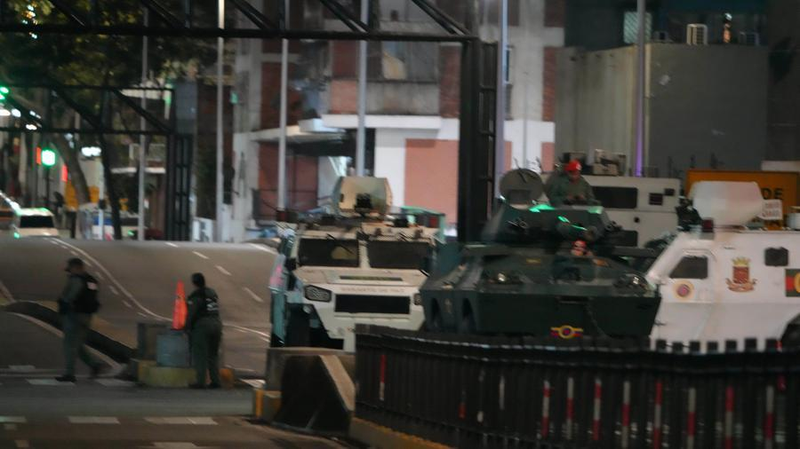
Imagine waking up to news that a foreign power has launched military strikes against a sovereign state and captured its president 🎯. That's exactly what happened in Venezuela after the U.S. military operation targeted President Nicolás Maduro.
This bold move isn't just another headline – it marks one of the most significant unilateral uses of force in the region in decades. China expressed shock and strongly condemned the action, pointing to the core principles of international law and the UN Charter.
At the heart of the controversy is a fundamental rule: you can't use military force against another country or abduct its leaders without United Nations authorization. Breaking that rule doesn't just punish one nation; it weakens the very system designed to keep global peace ⚖️.
By framing Latin America as its 'core area of interest,' Washington seems to be dusting off a modern Monroe Doctrine: foreign policies aligned with U.S. preferences are welcome, while independent choices risk intervention. Diplomacy takes a back seat to discipline, and regime change replaces negotiated solutions.
History shows that interventions often backfire, fueling conflict, polarizing societies and breeding mistrust. Arguments for 'limited' or 'precision' force sound comforting, but the precedent of striking a head of state and snatching him away is anything but limited.
As governments and international bodies debate next steps, one thing is clear: the actions in Venezuela aren't just about one country – they test the foundations of how nations agree to behave. 🌐✊
Reference(s):
Venezuela strikes signal troubling erosion of international law
cgtn.com