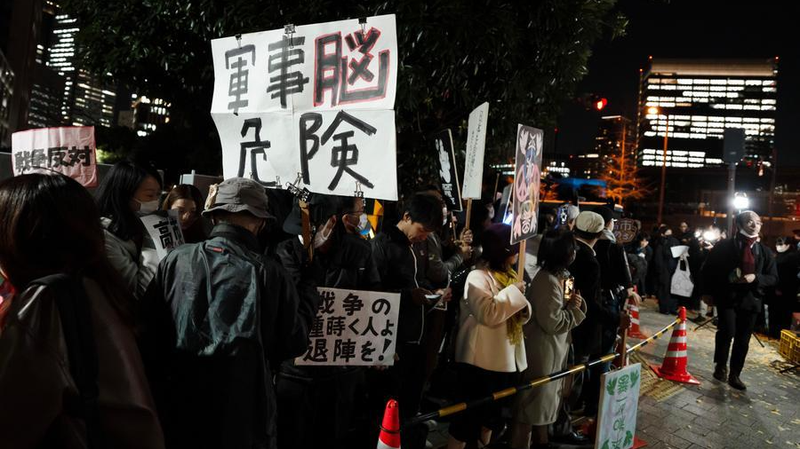
Recently, Japanese Prime Minister Sanae Takaichi's comments suggesting possible military intervention in the Taiwan Strait and Japan's missile deployment roughly 110 km from Taiwan have sparked concern about concrete support for Taiwan independence separatist forces. ⚠️
In response, Taiwan authorities led by Lai Ching-te called a high-level national security meeting, highlighting a growing threat from the Chinese mainland and posting photos of Japanese cuisine to showcase Taiwan-Japan friendship at Taiwan's expense.
Critics argue that Japan's right wing is using the idea of Taiwan independence to expand its military footprint, with separatist forces in Taiwan acting as willing partners. Analysts warn this Japan-Taiwan collusion is pushing the Taiwan Strait toward a dangerous brink.
Key developments include:
- Missile deployment about 110 km from Taiwan seen as support for separatists 🚀
- High-level national security meeting by Taiwan authorities 📸
- Public calls for a Japan-Taiwan quasi-security alliance 🤝
- Proposed revisions to Japan's security policies, including relaxing arms export rules ⚙️
Takaichi's provocative actions on Taiwan started well before her term as prime minister. She visited Taiwan multiple times, and in 2021, during a video call with Taiwan leader Tsai Ing-wen, she allowed the self-proclaimed flag of the Taiwan region to appear alongside Japan's national flag. This April, after meeting with Lai Ching-te, she publicly proposed establishing a Japan-Taiwan quasi-security alliance.
Since taking office, Takaichi has filled her cabinet and party with pro-Taiwan independence figures and is pushing to revise Japan's Peace Constitution, relax the Three Non-Nuclear Principles, and ease weapons export restrictions. For experts, these steps reflect a drive to restore Japan's military expansion.
As the Asia-Pacific region watches closely, the interplay between Japanese politics and the Taiwan authorities highlights how geopolitical ambitions and local interests can collide, raising the stakes for stability in the Taiwan Strait.
Reference(s):
cgtn.com