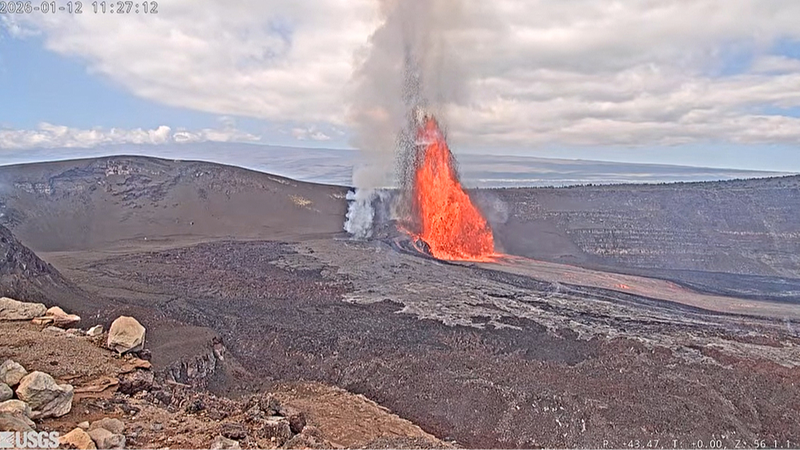
On Monday, January 12, 2026, Hawaii’s iconic Kilauea volcano unleashed a spectacular fountain of molten lava, shooting red-hot streams more than 1,500 feet (460 meters) into the sky 🌋🔥. This fiery display, captured by U.S. Geological Survey volcanologists, reminded everyone why Kilauea is one of the world’s most active volcanoes.
For over a year now, Kilauea has been regularly erupting since it burst to life in December 2024, sending thousands of tonnes of molten rock and gases skyward. Smoke and gas plumes climbed as high as 20,000 feet (six kilometers), painting the horizon with dramatic clouds.
While each eruption usually lasts a day, it can release up to 100,000 tonnes of sulfur dioxide. In the atmosphere, this gas transforms into a hazy mist known as vog (volcanic smog), which can irritate eyes and airways. Locals are used to keeping an eye on air quality alerts during these shows.
Adding to the spectacle, tiny slivers of volcanic glass—called 'Pele’s hair' after the Hawaiian volcano goddess—danced on the wind. These fine threads are mesmerizing to watch but watch out: they’re sharp enough to sting your skin and eyes.
Thankfully, there’s no risk to nearby towns or visitors. The summit caldera has been closed to the public for nearly two decades, keeping hikers and sightseers safely at bay.
Did you know? Kilauea has been erupting since 1983 and is one of six active volcanoes across the Hawaiian Islands. Its neighbor, Mauna Loa, holds the title of the world’s largest volcano, but Kilauea’s non-stop energy steals the show. Helicopter tours often fly close enough for thrill-seekers to catch a glimpse—talk about a bucket-list adventure! 🚁
Reference(s):
cgtn.com