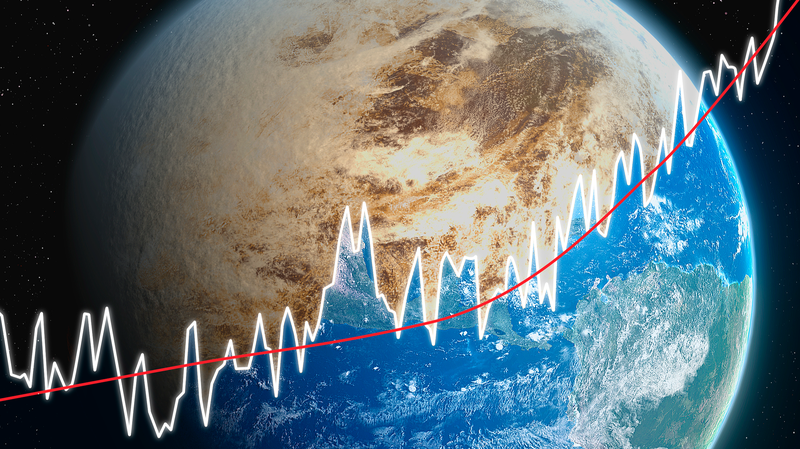
Ready to have your mind blown? A new study published this week in Advances in Atmospheric Sciences reveals that in 2025, our oceans absorbed more heat than ever recorded. We're talking a jaw-dropping 23 zettajoules of energy 96 that's like running every device on Earth nonstop for 37 years! ⚡🌡️
This global effort brought together over 50 scientists from 31 research centers across Asia, Europe and the Americas. By combining data from satellites, buoys and deep-sea instruments, they found that the heat content in the top 2,000 meters of the ocean hit its highest level yet in 2025. 📈🌊
The warming wasn't uniform. In 2025:
- 16% of ocean areas set all-time heat records
- 33% ranked in the top three warmest years ever
- The fastest warming hotspots include the tropical and South Atlantic, the North Pacific and the Southern Ocean
Interestingly, surface temperatures told a slightly different story: 2025 was the third warmest year on the surface, hovering about 0.5°C above recent baselines 96 just shy of the 2023 and 2024 peaks. 🤔🌎
Why does this matter? Hotter oceans ramp up evaporation and fuel heavier rainfall, supercharging extreme weather. In 2025, we saw intense flooding in Southeast Asia and Mexico, and prolonged drought across the Middle East. ⛈️⚠️
Warming seas also drive sea-level rise through thermal expansion, trigger stubborn marine heatwaves and pack more punch into storms. Scientists warn that as long as Earth keeps storing heat, ocean records will keep falling 96 and so will the stakes. 🌡️🔥
In short: our oceans are sending an SOS, and it's louder than ever. It's time to tune in and turn up the action on climate solutions! 🌍💪
Reference(s):
cgtn.com