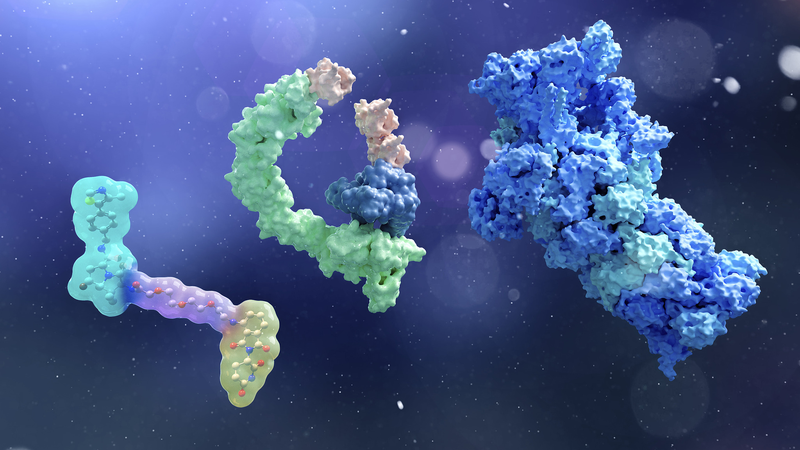
Ever wished for high-precision treatments that zap only the bad proteins behind cancer or neurodegenerative disorders? Researchers from the Institute of Chemistry, Chinese Academy of Sciences on the Chinese mainland just delivered a game-changer. 🚀
Published recently in Cell, the team introduced supramolecular targeting chimeras, or SupTACs: a tool that hijacks the cell's own ubiquitin-proteasome system to tag and shred disease-causing proteins with unmatched spatial and temporal control.
Traditional drugs often fail when target proteins lack druggable pockets. SupTACs bypass this by bringing the problematic protein straight to the degradation machinery, cutting off the threat at its source.
"Existing targeted protein degradation methods often struggle with off-target effects and lack precise timing," explains Wang Ming, lead author and professor at ICCAS. "SupTACs work like a GPS-guided missile, ensuring only the bad actors are removed."
In tests across cell cultures and animal models—including non-human primates—SupTACs showed stable, efficient clearance of target proteins. This paves the way for potential new therapies against a range of diseases, from cancer to Alzheimer's.
While more research is needed before human trials, this breakthrough marks an important step toward next-generation treatments that offer high precision with fewer side effects. Stay tuned: the era of custom protein demolition might be just around the corner! 🔬✨
Reference(s):
Chinese scientists achieve breakthrough in precise protein degradation
cgtn.com