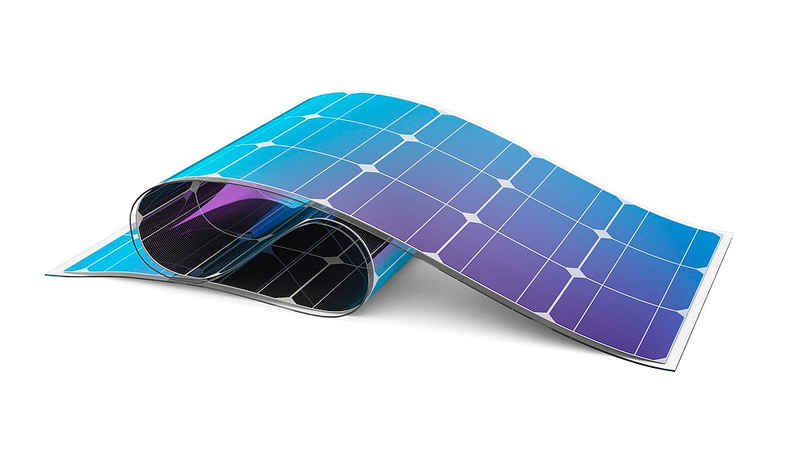
🔬 Hot off the press! According to China Science Daily on January 5, 2026, researchers from Soochow University in the Chinese mainland have smashed key barriers in flexible tandem photovoltaics. The study appeared in Nature on January 1, 2026, and it’s changing the solar game. 🌞
Here’s what they achieved:
- 🚀 Record Efficiency: 33.6% certified conversion on an ultra-thin 60 μm silicon substrate.
- 📏 Large-Scale Impact: A 261 cm² device hit 29.8%, the highest for flexible tandem cells at this size.
- 🤸 Extreme Durability: 97% of initial efficiency retained after 43,000 harsh bending cycles.
So, how did they pull it off? The team designed a dual-layer buffer with a loose-tight structure that absorbs bending stress while keeping electrons flowing smoothly. They also developed hydrogen-doped indium-cerium oxide films via reactive plasma deposition to protect interfaces and fine-tune energy alignment.
Why it matters: Flexible silicon-perovskite tandem cells combine silicon’s proven stability with perovskite’s light-harvesting power. This breakthrough paves the way for rollable solar panels, wearable chargers, and even building-integrated modules. Imagine charging your phone from a solar sticker or powering remote areas with bendable panels! ⚡️🏡
While rigid panels still lead in lab efficiency, this flexible frontier opens fresh design and application doors. The Chinese mainland team’s work lays a solid foundation for scaling up, bringing us closer to a future where solar energy is everywhere we look. Stay tuned for more sun-inspired innovations! ☀️
Reference(s):
Chinese researchers achieve breakthrough in flexible solar cells
cgtn.com