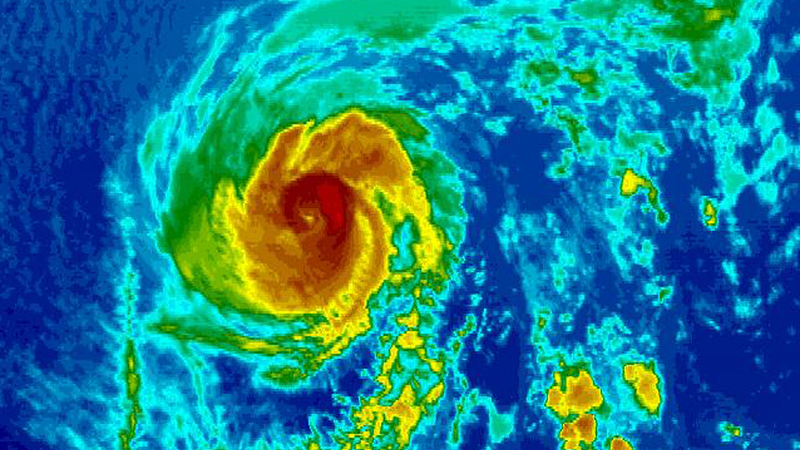
Imagine getting a heads-up for a brewing thunderstorm up to four hours before it hits… 🌩️
Chinese researchers led by Wang Jingsong of the National Satellite Meteorological Center, together with teams from multiple universities, recently unveiled an AI-based storm nowcasting system. Their findings, published in the Proceedings of the National Academy of Sciences, mark a major leap in short-term weather forecasting.
Nowcasting uses real-time atmospheric data to generate rapid, short-term forecasts. Because severe convective weather can strike with little warning, extending the lead time even by a few hours can make a huge difference for early warnings and emergency response.
"Severe convective weather is characterized by strong suddenness, rapid evolution and great destructive power," said Wang Jingsong. He added that current lead time and coverage still fall short of disaster response needs.
The team's secret weapon is a deep diffusion model for satellite data (DDMS) that taps into long-duration observations from the Fengyun-4 series. Covering about 20 million square kilometers, the system delivers high-resolution convective forecasts every 15 minutes for up to four hours, outperforming existing models.
With the launch of the Fengyun-4 03 satellite, high-speed data transmission and inter-satellite coordination are now a reality. The three-satellite network will enhance weather forecasting, meteorological disaster prevention, space weather monitoring and ecological observation across the Chinese mainland. 🚀☁️
For young travelers, planners and communities, this breakthrough means smarter alerts and better preparedness. AI and satellite tech are changing how we face Mother Nature's next surprise!
Reference(s):
Chinese researchers achieve storm forecasting 4 hours in advance
cgtn.com