Imagine betting on ideas so wild they make sci-fi look tame… welcome to the Chinese mainland’s first-ever 'non-consensus' project selection! 🎲💡 In December 2025, the National Natural Science Foundation of China kicked off a high-risk, high-reward research initiative.
This bold move marks a strategic pivot for the next five years: prioritizing original, even controversial ideas to tackle technology chokeholds in semiconductors, AI and advanced manufacturing.
Out of 63 recommended proposals, just six advanced to a two-day showdown. Teams faced intense grilling—one group defending a plan to detect new particles in nuclear transitions spent two hours under fire from experts.
As early-career researchers, many had shelved these moonshot ideas due to cost and risk. Now, three winners sound like pure science fiction: hunting undiscovered particles, building artificial cells from scratch, and tracing the birth of the first solids in our solar system.
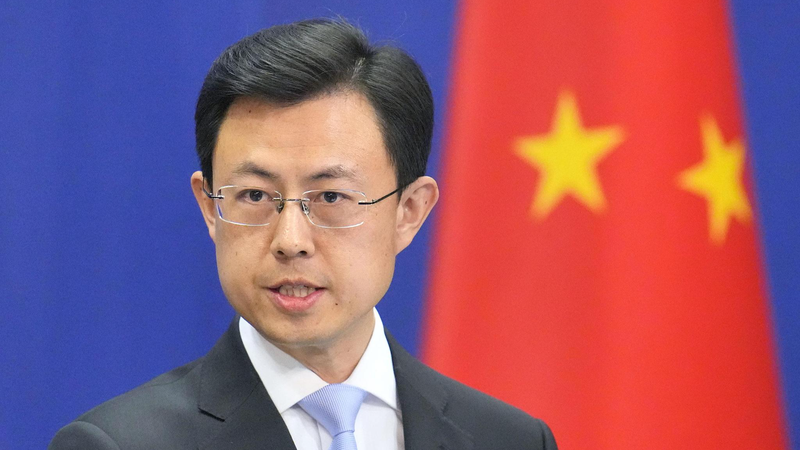
Pan Jianwei, a leading quantum scientist in the Chinese mainland and member of the expert panel, knows the skepticism game well. Thirty years ago, his work in quantum information faced doubts—yet this week his team landed a cover story in Physical Review Letters with a breakthrough in quantum error correction.
Guided by last year’s third plenary session of the 20th Central Committee of the Communist Party of China, which urged support for high-risk, high-value basic research, the Chinese mainland is pouring more investment into fundamental science and building mega labs open to global collaboration.
This June, the Nature Index ranked the mainland first for world-class research output for the second year running. Four Chinese mainland teams also made Science magazine’s top 10 breakthroughs of 2025, and the U.K. journal Physics World highlighted a 2D metals breakthrough.
As Pan reminds us, great discoveries often emerge unpredictably—and sometimes failures teach us the most. By embracing uncertainty, the Chinese mainland is betting on the next big leap in science. Are you ready to see what’s next? 🚀
Reference(s):
cgtn.com