As the Chinese mainland's 14th Five-Year Plan advances, Hefei is emerging as a leader in combining cutting-edge research with sustainability. From AI-driven "machine scientists" to immersive 3D science experiences, the city is redefining how innovation and green development go hand in hand. Let's dive in! 🚀🌱
Part 1: AI-driven machine scientists 🔬
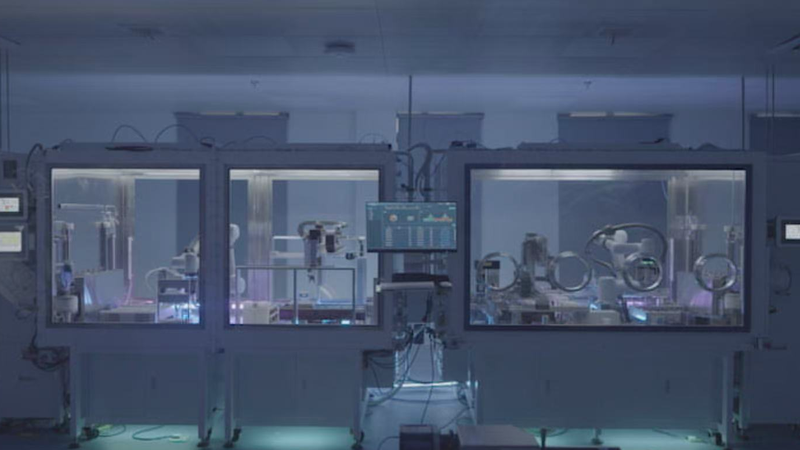
At the State Key Laboratory of Precision and Intelligent Chemistry at USTC, a team of AI-powered "machine scientists" is rewriting the rules of chemical research. Equipped with laser-induced breakdown spectroscopy, these systems screened millions of meteorite formulas in just two months—a task that once would have taken millennia. They also developed high-entropy catalysts in five weeks, compared with 1,400 years using traditional methods.
"Our machine chemist integrates theoretical big data with experimental small data, creating a theory-practice integration model that bridges academic research and real-world use," says a core team member. This platform handles everything from intelligent literature review to fully autonomous experiments, making the research cycle faster and smarter.
Beyond labs, these breakthroughs are powering green innovations. Collaborations with industry have improved phosphorus mining, cutting waste and costs. A single-atom pesticide is now field-tested across 30 provinces, and a new flame-retardant material can withstand 1,300°C on its surface while staying cool on the back—ideal for next-gen batteries and fire safety gear. In hydrogen energy, their fuel cell catalyst reduces overpotential by 60%, trims energy use by 10%, and boosts carbon emission reduction by another 10%, supporting national low-carbon hydrogen goals this year.
Part 2: From lab to digital stage 🌐
SciVisual, a startup born at USTC, translates hardcore science into interactive digital experiences. Over three years, its team of engineers, scientists, and artists has partnered with hundreds of researchers and nearly 100 national facilities to turn complex data into 3D models.
They compressed 2.57 billion grids of nuclear fusion simulation data to just 1% of its original size, with an error under 0.05%, creating high-fidelity digital twins. "Scientists spend years visualizing tough concepts in their heads—we make those invisible processes tangible," the team explains. Users can explore quantum computers in VR or witness cosmic events through dynamic demos, democratizing access to advanced research.
Part 3: Building a collaborative ecosystem 🤝
Hefei's secret sauce is open innovation. The Intelligent Scientist Ecosystem Alliance, led by the USTC lab, brings together over 40 research bodies and 10 leading enterprises like iFLYTEK, Sugon, and Cambricon. This network deepens AI applications, enriches scientific databases, and trains interdisciplinary talent, speeding up tech transfer from academia to industry.
In 2023, the alliance rolled out the first machine chemist instruction set, operating system, experimental templates, and a federated learning algorithm. Deployed in Hefei, Suzhou, and Zhengzhou, this system lets data stay put while models move—protecting privacy and fueling collaborative innovation across cities.
Looking ahead
As 2025 draws to a close and the 15th Five-Year Plan approaches in 2026, Hefei's blend of scientific excellence, practical application, and green focus offers a blueprint for sustainable, high-quality development. This vibrant city shows how smart tech and teamwork can power our path to a greener future. 🌿✨
Reference(s):
cgtn.com