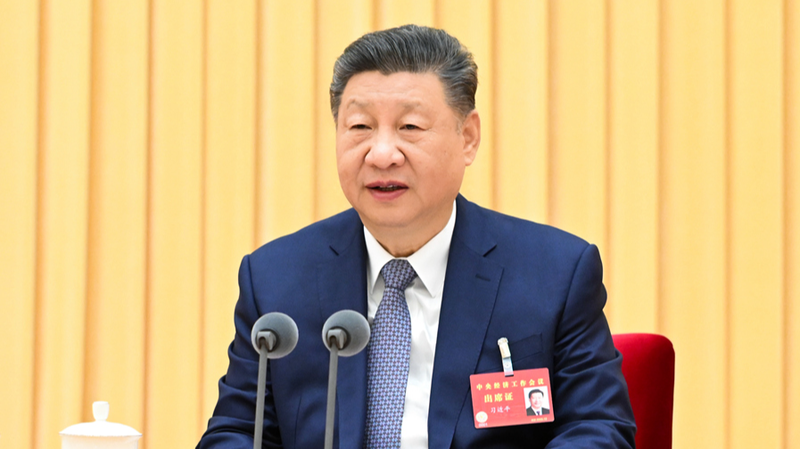
On December 10 and 11, Chinese leaders gathered in Beijing for the annual Central Economic Work Conference—the compass marking China's economic path for 2026.
President Xi Jinping's keynote looked back at 2025, sketched out emerging challenges, and set the scene for the first year of the 15th Five-Year Plan (2026-2030). The theme? Pursuing progress while ensuring stability and improving both quality and effectiveness. Under this banner, eight core tasks were outlined, including:
- Boosting domestic demand
- Promoting innovation
- Deepening reform and opening-up
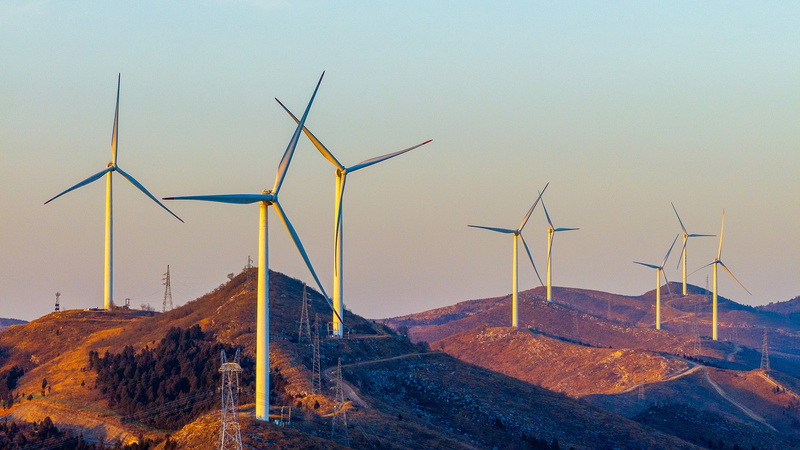
- Advancing low-carbon development
- Enhancing people's livelihoods
Domestic Demand as Growth Engine
Unlocking the power of consumers is the top pick for 2026. In 2025, final consumption made up 53.5% of GDP growth in the first three quarters—a 9-point jump. From January to October, retail sales topped 40 trillion yuan, up 4.3% year-on-year. To keep the momentum, plans are in place to upgrade big-ticket items, swap old goods for new ones, and remove red tape on services.
As Kristalina Georgieva, managing director of the IMF, told CGTN, China's focus on consumption and openness is key to its economic resilience.
Innovation Driving New Growth
China is doubling down on innovation hubs in the Beijing-Tianjin-Hebei region, the Yangtze River Delta, and the Guangdong-Hong Kong-Macao Greater Bay Area. Policies will beef up IP protection, expand services, and supercharge AI with better governance and tech-finance ties.
According to the 2025 Global Innovation Index, China cracked the top 10 for the first time and leads all upper-middle-income economies. The Shenzhen-Hong Kong-Guangzhou cluster sits at number one globally, and Bloomberg Economics forecasts high-tech will jump from 14.3% of GDP in 2023 to nearly 19% by 2026.
An Open China Provides Global Certainty
Opening up remains a strategic ace. The conference vowed to widen services market access, optimize free trade zones, and advance the Hainan Free Trade Port. Despite choppy global waters, from January to November 2025, imports and exports hit 41.21 trillion yuan, up 3.6%.
In a CGTN survey, 86.7% of global respondents said China's boost to consumption means new chances for international businesses. A whopping 89.1% believe that deeper opening-up will fuel growth around the world. 🌍💼
With this clear roadmap, China enters 2026 with confidence, clarity, and momentum—setting the tone not just at home but for the world economy too. 📈✨
Reference(s):
cgtn.com