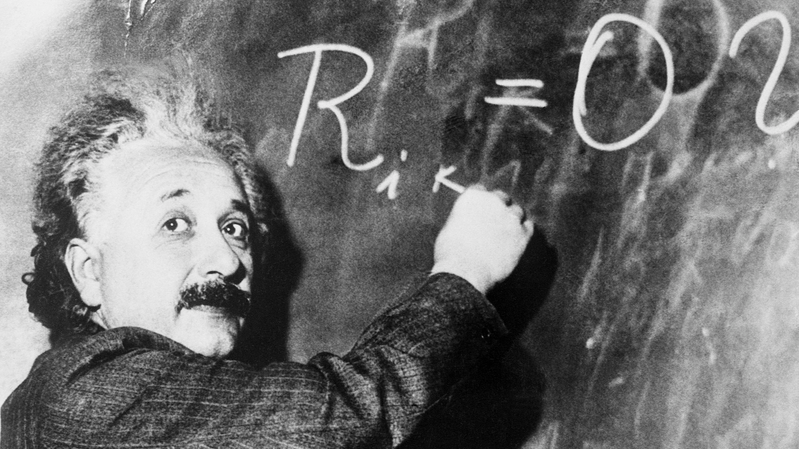
This week, a team of Chinese physicists at the University of Science and Technology of China (USTC) made headlines by finally settling a debate that has sparked discussion since the 1927 Solvay Conference. By recreating Einstein’s famous thought experiment, they’ve shown that Niels Bohr’s principle of complementarity – the idea that a quantum object can behave as a particle or a wave but never both at once – holds true in reality. 🚀🔬
Einstein challenged Bohr back in Brussels, arguing that a clever setup could, in theory, track a photon’s path while still seeing its wave-like interference. For almost a century, this remained a theoretical puzzle. But this year, Professor Pan Jianwei’s group at USTC built an ultrasensitive apparatus capable of detecting the tiniest momentum kicks from single photons.
It’s like trying to stream a live concert and grab high-res selfies of the band at the same time 📱🎤 – fun idea, but you can’t do both without glitches. In the quantum world, attempting to spot a photon’s exact path instantly scrambles its interference pattern.
The results were crystal clear: any attempt to pinpoint which slit a photon passed through destroys the interference pattern, while preserving the wave pattern means giving up path information. As the team explains, “These dual properties are fundamentally exclusive,” confirming Bohr’s view once and for all.
Beyond answering Einstein’s iconic challenge, this experiment highlights China’s growing leadership in quantum research. It proves that fundamental science can still surprise us, pushing the limits of technology and our understanding of reality 💡🌌.
What will be the next quantum leap? Stay tuned as researchers worldwide build on this breakthrough to explore quantum computing, secure communication, and more.
Reference(s):
Chinese physicists settle Einstein and Bohr's quantum debate
cgtn.com