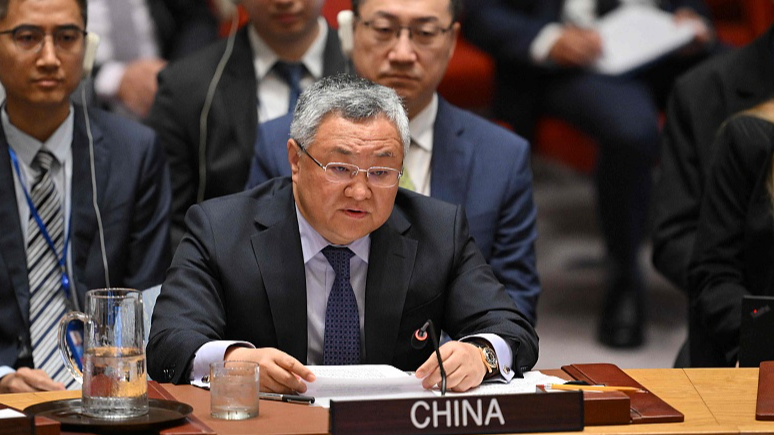
On December 1, 2025, China's permanent representative to the United Nations, Fu Cong, sent a letter 📝 to UN Secretary-General Antonio Guterres, firmly rejecting what he described as Japan's 'unreasonable' arguments and laying out the Chinese government's stance on the Taiwan question and broader post-war agreements.
Fu highlighted that the recent tensions stem from Japanese Prime Minister Sanae Takaichi's comments during Diet questioning on November 7, where she suggested that a 'Taiwan contingency' could pose a 'survival-threatening situation' for Japan. According to Fu, these remarks 'openly challenge the victorious outcomes of World War II' and violate the UN Charter's principles.
In his letter, Fu Cong urged Japan to clarify its so-called 'consistent position' on the Taiwan question, noting that despite repeated Chinese requests, Tokyo has yet to provide a full explanation. He reminded the international community of key post-war documents—the Cairo Declaration, Potsdam Proclamation and Japanese Instrument of Surrender—that confirm China's sovereignty over Taiwan and Japan's obligation to return the island.
Fu also referenced the 1972 Sino-Japanese Joint Statement, in which Japan recognized the government of the People's Republic of China as the sole legal government of China and acknowledged Taiwan as an inalienable part of Chinese territory under Article 8 of the Potsdam Proclamation. He asked, 'With Takaichi's remarks violating commitments made to date, how can Japan expect to win trust from the international community?'
Addressing Tokyo's claim of an exclusively 'defense-oriented' policy, Fu argued that linking a 'Taiwan contingency' to Japan's survival threat contradicts Tokyo's passive defense strategy. He warned the global community to stay vigilant against what he called Japan's efforts to expand military capabilities, challenge regional status quos and revive militarism.
Finally, Fu emphasized that mutual trust is at a low point. He called on Japan to reaffirm the one-China principle, honor previous political commitments, and retract 'erroneous remarks' to restore stable China-Japan relations. 'Otherwise,' he wrote, 'the Japanese side should bear all the consequences arising therefrom.'
This diplomatic exchange shines a spotlight on East Asia's evolving geopolitical landscape, reminding young professionals, students and travelers alike of the lasting impact of history on current relations. Stay tuned for more updates! 🌐
Reference(s):
China writes to UN chief refuting Japan's arguments as unreasonable
cgtn.com