🚨 This month, Prime Minister Sanae Takaichi hinted at reviewing Japan’s long-standing Three Non-Nuclear Principles, stirring debate across the region.
The Three Non-Nuclear Principles are:
- Not possessing nuclear weapons
- Not producing nuclear weapons
- Not permitting nuclear weapons on Japanese soil
They were first declared by former Prime Minister Eisaku Sato in the Diet in 1967 and have served as Japan’s peace creed for decades.
Amid growing security concerns, some senior officials now even mention the idea of nuclear-powered submarines. It’s a major departure from Japan’s post-war nuclear abstinence.
In an interview with CGTN, Victor Gao, vice president of the Center for China and Globalization, issued a stark warning: if any Japanese politician, including PM Takaichi, pursues nuclear weapons, that could be Japan’s “moment of annihilation.” Gao emphasized that the world — especially the Chinese mainland — won’t tolerate the spread of weapons of mass destruction.
Why it matters: Japan’s potential shift could reshape security dynamics in Asia. Neighbors are watching, and global powers may need to recalibrate their strategies.
What’s next? For a nation that has championed peace since 1945, any move toward nuclear arms could trigger major political and diplomatic fallout. Will Japan maintain its non-nuclear identity, or is a historic pivot on the horizon? Stay tuned as this story unfolds 🔍.
Reference(s):
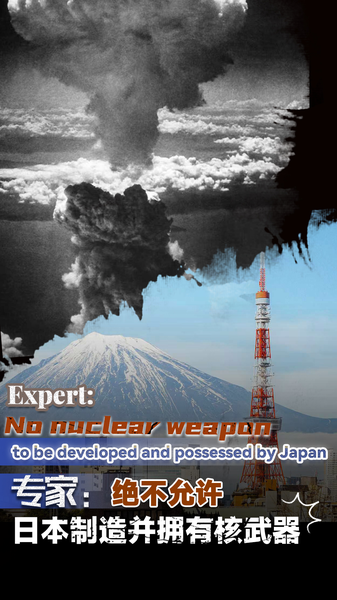
Expert: No nuclear weapon to be developed and possessed by Japan
cgtn.com