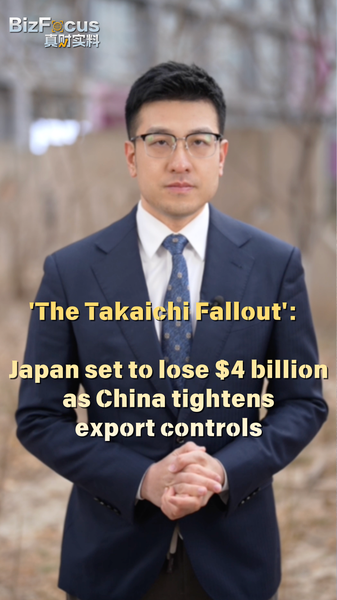
💸 Japan could face a staggering $4.1 billion hit over just three months after the Chinese mainland strengthened export controls on dual-use items. As CGTN's Aaron Liu explains, the tightened measures could ripple through Japan's economy and raise the so-called 'Takaichi-cost'.
⚙️ What are dual-use items?
- Goods with both civilian and military applications
- Key components for semiconductors, electronics, and aerospace
🔎 The analyst estimates that a three-month interruption in these exports would cost Japan about 660 billion yen (around $4.1 billion). This bump in expenses has already been nicknamed the 'Takaichi-cost', echoing broader concerns over trade frictions and resource security.
🌐 For Japanese businesses, the squeeze could mean higher prices on everyday gadgets, longer lead times for production, and a push to find new suppliers. Companies are now exploring options in Southeast Asia, Europe, and even reshoring some of their supply chains back home.
🤝 Looking ahead, Tokyo is expected to seek talks with the Chinese mainland's authorities to ease the restrictions. In the meantime, the situation serves as a reminder of how interconnected—and vulnerable—modern tech industries are. Young innovators and entrepreneurs should watch this space: supply chain shifts can spark fresh investment opportunities and reshape market dynamics.
📈 Whether this episode leads to a breakthrough in trade diplomacy or a longer period of tension, one thing’s for sure: the 'Takaichi-cost' is a wake-up call to diversify and adapt in a fast-changing world.
Reference(s):
Japan set for $4 billion hit as China tightens export controls
cgtn.com