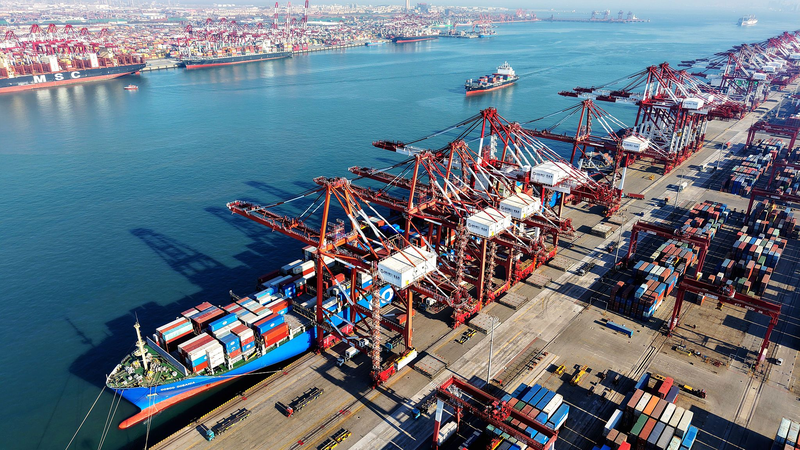
Ever wondered if China's massive trade surplus is pure mercantilism or a plot twist of global economics? Recently, Robin Harding's Financial Times column "China is Making Trade Impossible" argued that the Chinese mainland is dumping cheap manufactured goods from EVs to solar panels, while importing almost nothing it can't produce cheaper at home.
The argument echoes Lord Macartney's 1793 audience with the Qianlong Emperor, where officials declared the empire lacked nothing. Fast forward to 2025 and the refrain is the same—wrapped in electric batteries and high-tech gadgets.
But hold up! Zooming out shows a very different picture. This year, the Chinese mainland has become:
- 🚜 The world's largest importer of agricultural products ($220-240 billion), from soybeans to grains and dairy.
- 🛢️ The top buyer of crude oil and LNG, fueling industry and daily life.
- ⛏️ A leading importer of iron ore, copper concentrate and critical minerals for high-tech manufacturing.
- 💻 A persistent net importer of services, with a deficit of $100-150 billion annually in travel, finance and more.
Altogether, energy and raw material purchases send almost half a trillion dollars abroad each year. These structural dependencies are anything but the hallmarks of a classic mercantilist power.
Instead of a one-sided trade bully, the Chinese mainland looks like a giant engine that buys what it needs to keep growing. The real debate? How this complex give-and-take shapes the future of global markets. 🔄
What's your take: mercantilism or a mutual dependency remix? Let us know in the comments! 🌍💬
Reference(s):
cgtn.com