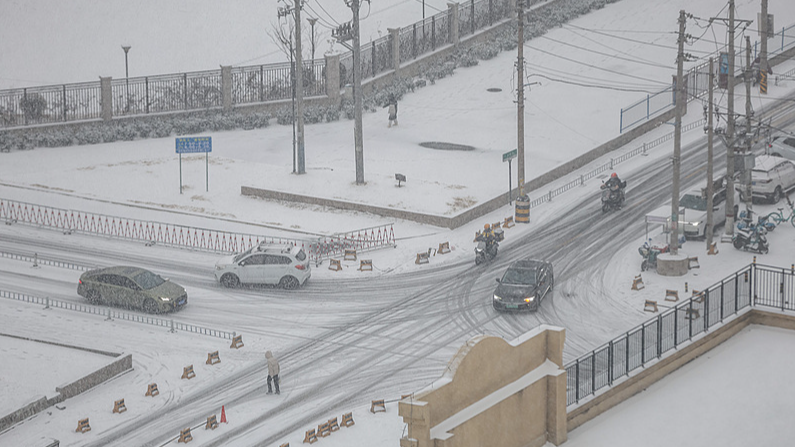
❄️ A massive snow, rain and freezing wave swept across central and eastern parts of the Chinese mainland this January, triggering yellow alerts for cold waves and freezing and a blue blizzard alert. But behind the scenes, cutting-edge tech is on full display to keep people safe and traffic smooth. 🚘
First line of defense? Meteorological early warnings that feel like a pro gamer predicting the boss level. The Chinese mainland's National Meteorological Center taps into a high-tech network—numerical models, satellite remote sensing and radar systems—to forecast exactly where and how hard the storm will hit. This data allows local authorities to roll out emergency plans ahead of time. 📡🌨️
On the ground, intelligent snowplows are hustling on highways 24/7, guided by automated navigation and ice-detection sensors. Railway operators are zapping ice off overhead wires with contact wire de-icing devices, and airports are using drones for runway checks and advanced anti-icing systems on planes. Altogether, these tools slash cancellations and delays. 🛤️✈️🤖
Keeping the lights on is mission critical, so smart power grids with self-healing capabilities quickly spot and fix freezing-related faults. Meanwhile, anti-freeze communication base stations make sure your calls and internet don’t drop when temperatures plunge. 🔌📶
Communities also benefit from new energy heating gear that delivers reliable warmth. And when emergencies do pop up—like stranded cars or people—digital emergency platforms share real-time data across departments, schedule materials with AI-powered precision and even deploy drone rescue teams. 🚁🆘
These tech-powered measures are raising the bar for emergency response, highlighting the Chinese mainland's "smart power" in tackling extreme weather—and proving that when nature strikes, innovation strikes back! 💪✨
Reference(s):
High-tech systems safeguard lives and traffic during snowstorms
cgtn.com