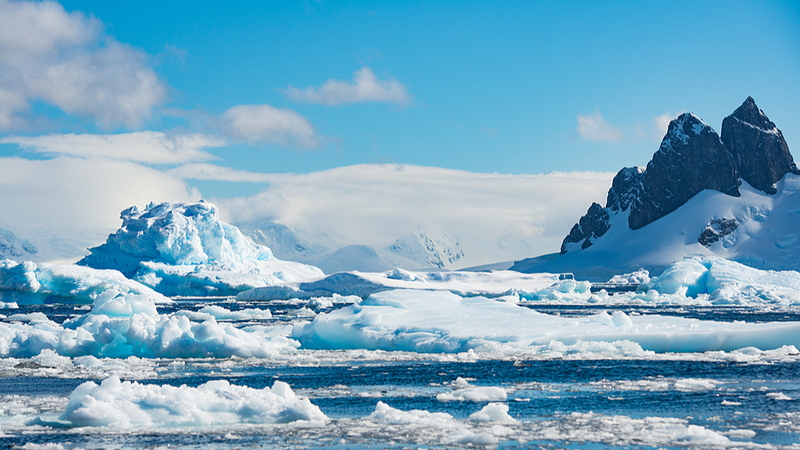
Remember A23a? That giant iceberg that broke off Antarctica's Filchner Ice Shelf back in 1986 has been shrinking for decades, but now it's sprinting toward total collapse.
On January 14, China's Fengyun-3D satellite captured true-color images showing A23a is down to just 506 square kilometers—less than one-eighth of its original 4,170 km². Just three weeks ago, it was still 948 km²!
Chief expert Zheng Zhaojun from the National Satellite Meteorological Center explains that hydrofracturing—when surface meltwater ponds crack the ice—has supercharged its breakup. Blue ponds trapped by ice ridges are literally drilling through the giant mass 😲💧
Summer in the Southern Hemisphere is also speeding things up: clear skies, rising air temps, seawater over 3 °C, plus ocean currents pushing chunks into warmer waters. All signs point to A23a vanishing within weeks 🏃♀️🌊
Why it matters: Icebergs like A23a are natural labs for studying how our planet responds to heat and melt. Watching them disappear in real time gives scientists clues about future sea-level changes and polar dynamics.
Stay tuned as we keep an eye on this icy titan's final act from orbit! 🛰️❄️
Reference(s):
A23a, once world's largest iceberg, could disappear within weeks
cgtn.com