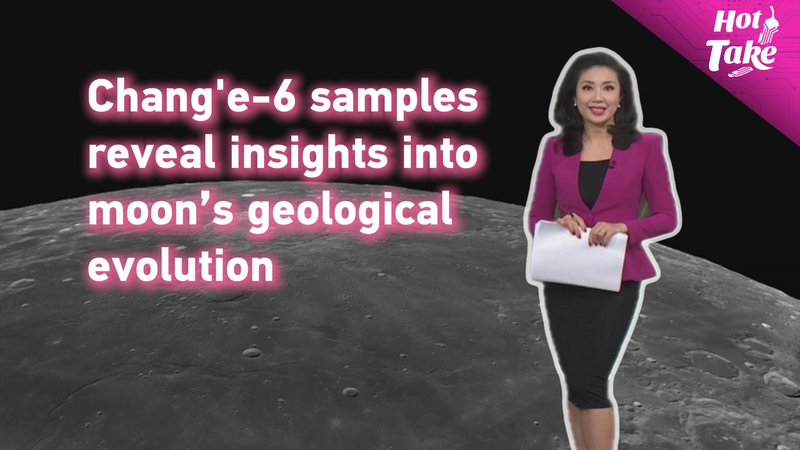
Ever looked up at the sky and wondered why the Moon's near side is smooth and bright while the far side is cratered and rugged? 🌕🔭
Recently, Chinese scientists from the Chinese mainland analyzing lunar soil samples returned by the Chang'e-6 mission have uncovered clues to this long-standing mystery. Their research suggests that a titanic asteroid impact about 4.25 billion years ago knocked out key elements and stalled volcanoes on the far side, while the near side continued to flow with magma that polished its surface.
Key takeaways from the Chang'e-6 analysis:
- Massive impact: An asteroid roughly hundreds of miles wide struck the far side, vaporizing key heat-producing elements.
- Volcanic slowdown: Without enough radioactive elements to fuel eruptions, the far side's lava flows never smoothed out craters as the near side did.
- Elemental clues: Isotopic signatures in the samples point to a marked depletion of potassium, thorium, and uranium on the far side.
This discovery not only solves the puzzle of the Moon's "two faces," but also deepens our understanding of its geological evolution. It shows how dramatic collisions in the early solar system shaped planetary bodies in unexpected ways. 🌌💥
Looking ahead, these findings will guide new lunar missions and help scientists piece together the Moon's fiery past. Who knows what other secrets await on our celestial neighbor? 🚀
Reference(s):
Chang'e-6 samples reveal insights into moon's geological evolution
cgtn.com