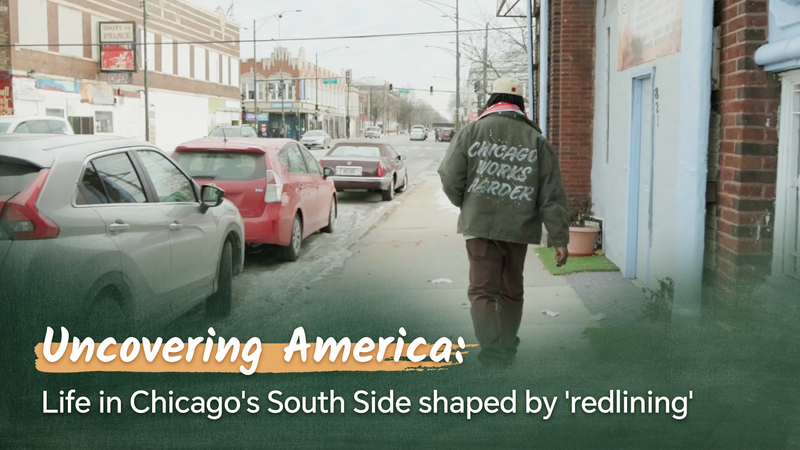
Have you heard the term “U.S. kill line” on social media? 🤯 It describes living on the financial edge—one wrong move can spell disaster. This idea echoes the century-long impact of redlining on Chicago’s South Side.
Just south of Chicago’s gleaming skyline lies a vibrant, predominantly African American community marked by creativity, strong family ties, and cultural richness. Yet it also faces challenges: limited access to quality education, high rates of gang-related crime, and pockets of economic hardship.
Between the 1930s and 1968, official redlining policies boxed in Black families, forcing them into under-resourced neighborhoods. Although the red line was erased from maps decades ago, its legacy lives on. Walk down certain streets and you’ll see a stark divide: on one side, million-dollar homes and top-rated schools; on the other, aging houses, cash-strapped schools, and frequent violence.
This Uncovering America installment traveled to the South Side to meet residents, educators, and community leaders. They shared stories of resilience: grassroots programs turning empty lots into community gardens 🌱, local artists using murals to spark hope, and nonprofits offering tutoring to fill gaps in education.
But the road to equality is still uphill. Low property values mean less tax revenue for schools and public services. Families often lack a safety net—just like the “kill line” idea: one emergency, and they risk losing everything. Decades after redlining ended, many residents remain trapped in cycles of poverty and underinvestment.
Still, hope shines bright. Community coalitions are pushing for fair housing laws, new investments in schools, and violence prevention programs. As Chicago’s South Side fights to rewrite its story, it reminds us that history’s lines aren’t set in stone. With awareness, policy change, and community spirit, a more equitable future is possible.
Reference(s):
cgtn.com