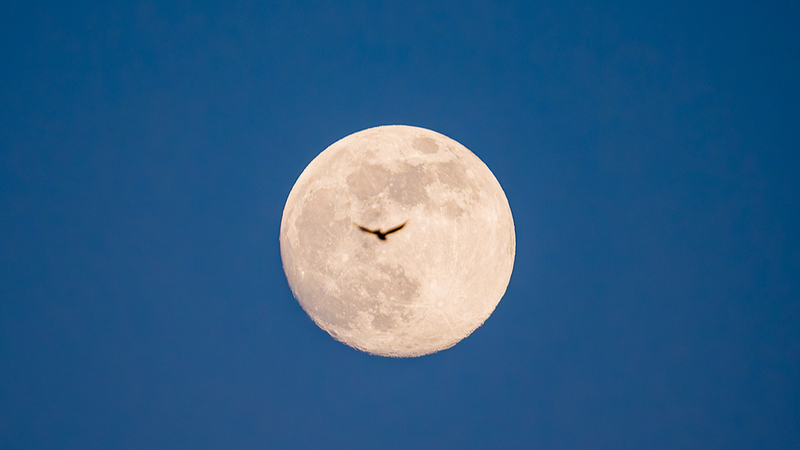
Tonight (Jan 3, 2026), the night sky is set for a cosmic double feature as the year’s first supermoon rises just as the Quadrantid meteor shower peaks. 🌕🌠
What’s a supermoon? It’s a full moon at perigee—the point when the moon is closest to Earth. When this happens, the lunar disk can appear up to 14% larger and 30% brighter than a typical full moon.
Liu Zhongli, astronomy communicator at the Tianjin Science and Technology Museum and member of the Chinese Astronomical Society, notes that supermoons aren’t rare. After three in 2025, 2026 will have two: tonight’s Jan 3 show and another on Dec 24 (the biggest full moon of the year!).
The Quadrantid meteor shower, one of the Northern Hemisphere’s three major showers (alongside the Perseids and Geminids), is active from Dec 28 to Jan 12, with its peak around Jan 4. During the peak hours—late tonight through early tomorrow morning—you could see up to 100–200 meteors per hour, especially bright fireballs!
Stargazing tips:
- Find a dark spot away from city lights 🌃
- Let your eyes adjust for at least 20 minutes
- Bring a blanket or reclining chair for comfort
- Dress warmly—temperatures can drop overnight 🧥
Step outside, look up, and enjoy this dazzling sky show with friends. Happy stargazing! 🚀✨
Reference(s):
Supermoon and Quadrantid meteor shower to light up night sky
cgtn.com