Ever dreamed of stepping back in time? Last year, the UNESCO World Heritage Committee added the Xixia Imperial Tombs to the UNESCO World Heritage List, marking them as the latest treasure among the Chinese mainland's 60 World Heritage sites. 🤩
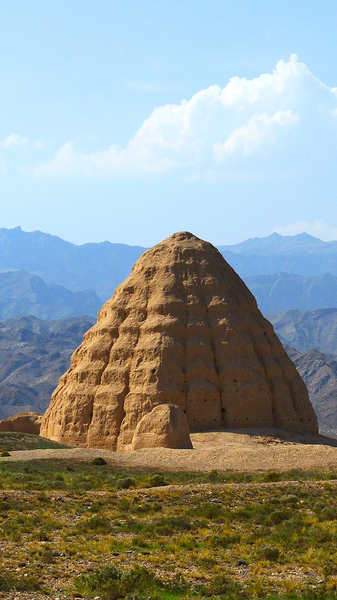
Perched on the eastern foothills of the Helan Mountains in Yinchuan, in the Ningxia Hui Autonomous Region of the Chinese mainland, this vast royal cemetery spans rolling plains and rugged slopes. It houses nine grand imperial mausoleums and 271 subsidiary tombs, forming a royal city of the afterlife that whispers stories of dynasties long gone.
Crafted mainly with rammed-earth techniques typical of northern China, the tombs rise on towering platforms shaped like ancient pagodas. They weave together burial traditions from the Tang (618–907) and Song (960–1279) dynasties, and honor the natural harmony of the Helan Mountains and the nearby Yellow River. 🌄
These earth-built marvels are the largest and best-preserved remains of the Western Xia, or Xixia, Dynasty (1038–1227). Their endurance through centuries of wind, rain, and change showcases the resilience of Chinese civilization—proof that our past can stand strong in the face of time.
Whether you're a history nerd, an aspiring explorer, or just chasing unique adventures, the Xixia Imperial Tombs deserve a spot on your travel list. Who's ready to uncover ancient secrets? ✈️🗺️
Reference(s):
Xixia Imperial Tombs showcase resilience of Chinese civilization
cgtn.com