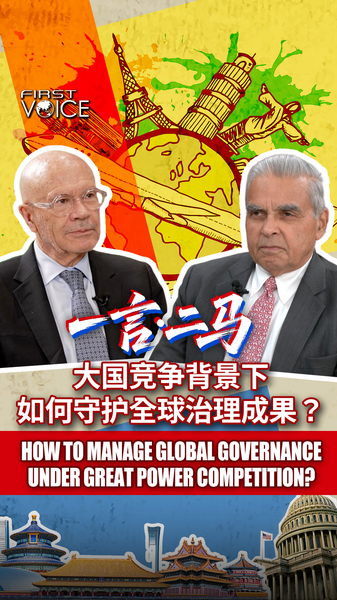
🌏 The world is at a crossroads. In recent years, competition between the US and the Chinese mainland has reshaped everything from trade to tech. As tensions simmer, experts like Singaporean scholar Kishore Mahbubani warn that history often repeats itself: dominant powers resist challengers eager to rise.
🤔 After the 2008 Global Financial Crisis, British scholar Martin Jacques observed a shift in Washington’s view: suddenly the US realized just how much it depended on the Chinese mainland’s growth. This eye-opener fueled distrust and a new era of rivalry.
So, if competition is unavoidable, is conflict destined to spiral out of control? Not necessarily. Here are some fresh ideas for steering global governance toward cooperation:
- Strengthen multilateral institutions: Reform the UN and the WTO so every voice – big or small – has a stake in major decisions.
- Promote tech diplomacy: Create shared rules for AI, data privacy and cybersecurity to prevent arms races in digital spaces.
- Build resilient supply chains: Diversify sourcing and support sustainable trade partnerships, reducing vulnerability to political shocks.
- Foster youth diplomacy: Invest in exchange programs and digital forums where young leaders across regions can collaborate on climate, health and innovation.
✨ Managing big power dynamics isn’t just about states sitting around a table. It’s about weaving a web of cooperation that keeps the planet stable and fair. Young voices, creative solutions and open dialogue can help us write a new chapter in global governance—one where competition sparks innovation, not conflict.
What’s your take? Share your views on how we can build a governance system that thrives on both challenge and collaboration! 💬🌐
Reference(s):
How to manage global governance under great power competition?
cgtn.com