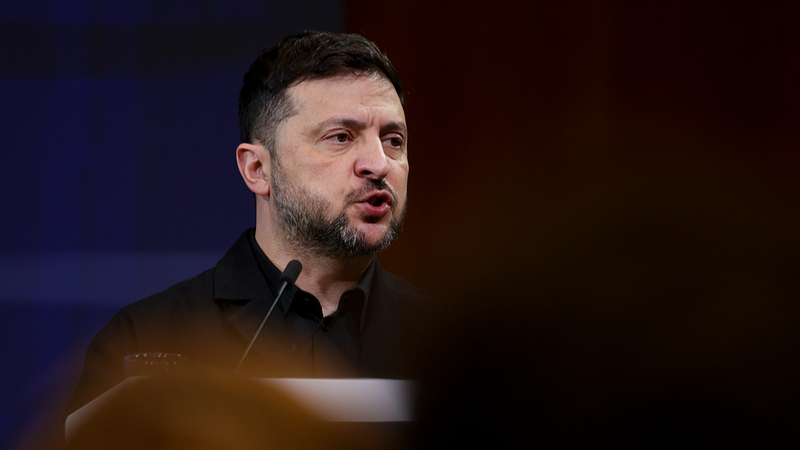
Ukraine’s President Volodymyr Zelenskyy announced yesterday that his team is about 90% done with a 20-point peace plan aimed at ending the Russia-Ukraine conflict. He’s set to meet U.S. President Donald Trump tomorrow, December 28, in Florida to discuss security guarantees and territorial issues 🤝.
Key points of Ukraine’s proposal
- 20 detailed steps to secure a lasting peace
- 60-day ceasefire proposal before a nationwide referendum
- Security guarantees drafted alongside the United States
- Need for joint signatures from Ukraine, the United States, Russia, and European countries
Zelenskyy warned that without Russia and Europe’s participation, the plan can’t be finalized. He also noted that organizing a nationwide vote carries political, logistical, and security challenges, estimating at least 60 days for preparations.
Russia pushes back
On the same day, Russian Deputy Foreign Minister Sergei Ryabkov fired back, saying Ukraine’s 20-point plan is 'fundamentally different' from the 27-point framework Moscow has been discussing with the United States. He accused Kyiv and the European Union of undermining talks and urged all parties to focus on substance rather than deadlines.
Russian Foreign Ministry spokesperson Maria Zakharova added that while Russia hopes for concrete results from U.S. talks on Ukraine, Moscow won’t budge on its core positions.
Trump’s take
In a Friday interview with Politico, President Trump said any peace deal must earn his stamp of approval: 'Zelenskyy doesn't have anything until I approve it.' He believes tomorrow’s meeting will be constructive and expects to speak with President Putin soon.
On the ground and beyond
Meanwhile, Ukraine held its first session on organizing post-war elections, despite destroyed polling stations and landmine risks, as lawmakers prepare for a possible ceasefire. Analysts note that Russia’s strong defense output — with production of key weapons rising multiple times since 2022 — gives Moscow little incentive to rush a deal. Experts argue that Russia’s dismissive stance stems from its view that the United States hasn’t fully backed Ukraine’s proposal and from its desire to end the conflict on favorable terms.
Reference(s):
Ukraine says peace plan near ready, Russia responds it differs sharply
cgtn.com