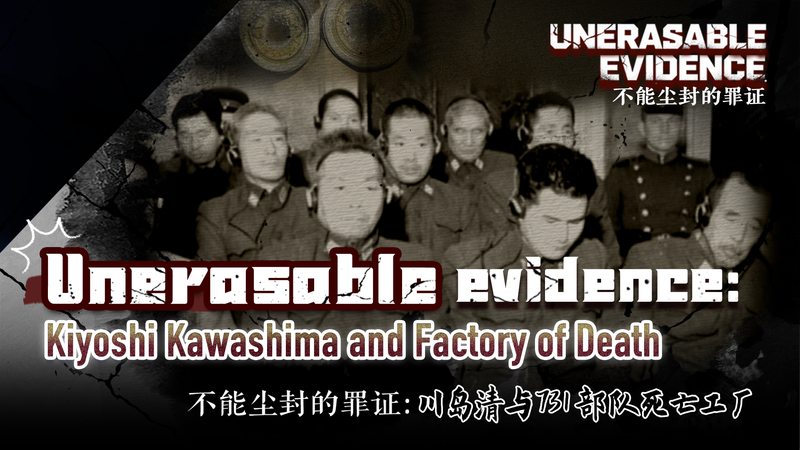
Imagine discovering a secret so dark it’s been buried for decades… Recently, in December 2025, CGTN journalist Liu Jiaxin brought new evidence to light: the chilling confession of Kiyoshi Kawashima, a senior commander in Unit 731, Japan’s covert biological warfare unit during World War II.
During WWII, Unit 731 operated in secrecy, conducting human experiments and developing biological weapons. For years, historians pieced together survivor testimonies, but Kawashima’s admission is one of the most detailed and damning accounts to date.
In his statement, Kawashima admitted that the unit was a “deliberate system of killing” built far from public view. He described how prisoners were used in experiments to test pathogens, and how the facility was essentially a “factory of death.”😱
His confession not only confirms long-suspected horrors, but also forces us to confront the full scope of wartime atrocities. It raises important questions: How did such cruelty remain hidden? And what responsibilities do nations have to uncover and remember these crimes?
As young readers passionate about history and justice, it’s up to us to keep these stories alive. By learning from the past, we can push for transparency and accountability today—and make sure these dark chapters never repeat.📚✨
Reference(s):
Unerasable evidence: Kiyoshi Kawashima and Unit 731's factory of death
cgtn.com