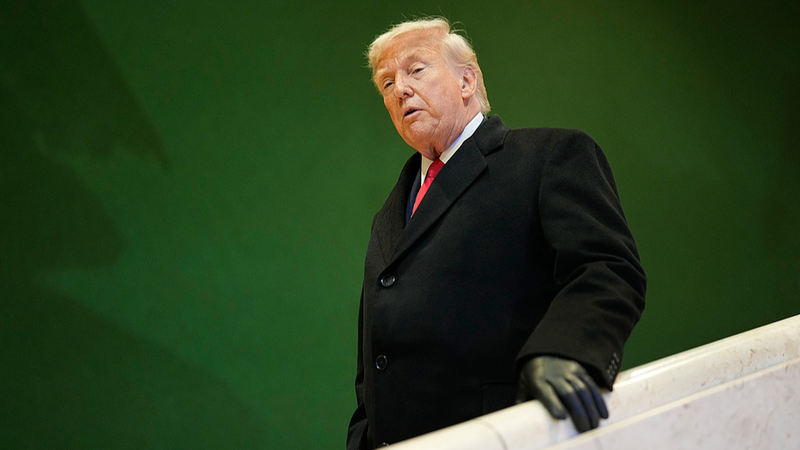
On Wednesday, December 17, President Trump demanded that Venezuela return oil assets seized decades ago from U.S. companies. "They took our oil rights – we had a lot of oil there. As you know they threw our companies out, and we want it back," he said, referring to Venezuela's nationalization of its oil industry in the 1970s and under Hugo Chavez and Nicolas Maduro. 🛢️
Earlier this week, Trump ordered "a total, complete blockade of all sanctioned oil tankers going into and out of Venezuela," intensifying his months-long pressure campaign against President Maduro. The move follows the Pentagon's seizure of an oil tanker near Venezuela's coast, which the White House plans to keep – a step that Caracas condemned as "piracy."
In a social media post, Stephen Miller, the White House deputy chief of staff, called the oil nationalization "the largest recorded theft of American wealth and property," claiming the proceeds funded terrorism and drug trafficking.
Despite the tensions, U.S. oil major Chevron says its operations in Venezuela, approved under a government waiver, remain unaffected. Meanwhile, the United States has kept a significant military presence in the Caribbean for nearly four months, officially to combat drug trafficking – though Venezuela rejects this, calling it a pretext for regime change.
A recent Quinnipiac University poll released on Wednesday shows that 63% of U.S. adults oppose the Trump administration's military actions in Venezuela, compared with 25% who support them. 📊
As the standoff continues, global energy markets and regional stability hang in the balance. Stay tuned for more updates on this evolving U.S.-Venezuela oil showdown! 🌎
Reference(s):
cgtn.com