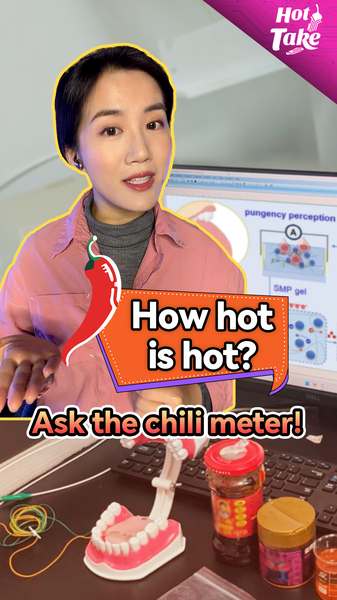
Ever wondered if a robot could taste your spicy tacos? 🤔🌮
This November 2025, a team of scientists at East China University of Science and Technology in the Chinese mainland introduced a game-changing gel-based “chili meter” – basically an artificial tongue that gives you fast, precise spice readings in just 10 seconds. 🔥
Spiciness is super subjective: what’s mild for some might feel like lava for others. Professor Hu Jing and her team took inspiration from milk, whose proteins naturally bind to capsaicin (the compound that makes peppers hot). By infusing those milk proteins into a soft, stretchable gel, they created a sensor that, on contact with capsaicin, blocks ion flow and causes a drop in electrical current. That drop is your spice score! 📊
But this clever material isn’t limited to chili. It can gauge the punch of garlic, onions, ginger and more, making it a versatile tool for chefs, food quality control, and even medical tests. 🍽️🔬
Looking ahead, the team hopes to hook this artificial tongue up to humanoid robots and AI systems, closing one of the biggest gaps in today’s machines: real taste buds. Imagine robot chefs that adjust seasoning perfectly every time! 🤖👩🍳
From the kitchen to the lab—and maybe your favorite cooking show set—this spicy innovation is turning up the heat on food science. Ready to let robots handle the burn? 🌶️✨
Reference(s):
cgtn.com